Greetings all, just a quick post to point you good people in the direction of:
A friendly competition to find the greatest battle report of the year!. The comp is being run by Mr Zhu Bagiee from the rather good Realm of Zhu blog who has worked hard to ensure it goes ahead this year (even producing the spiffing artwork above to promote it). It is open to fantasy battle reports of all types and the nominees this year are all first rate examples of the genre...........and one of mine!. You can read the nominated reports and vote for your fave over here so please take the time to read some great game reports and throw your weight behind the one you like the best.
Enjoy.
.......'Till next time......
Monday, 3 December 2018
Sunday, 25 November 2018
'Two nights of Cripes and Lummie'
As those who follow my bleatings on these pages will know i have been exploring the period of the non-history of Albilande known as the war of the four kings. I have been keen to recreate the period with the help of the tireless oldhammer plastic reenactment society by bringing the battles of said war back to life through the medium of pushing toy soldiers around a table. I believe so far this has been the best way to explore the period. However some of the happenings of the age can not be explained through this method and require a ruddy good delving i am not qualified to give. The actions of the overthrow of the ruling classes of Offenhammeshire, known in the nothistorical world as 'The two nights of Cripes and Lummie' would be one such example of this as to bring it to life in my normal way would be an undertaking beyond my meagre skills. To this end i have lifted (with the fictional authors permission of course) part of a chapter that i think best explains the events from the lauded work 'Albilande, what a flippin' palava' by Dr Levington Tyxi-Lyx, which in my belief is the finest unnoted work on the subject. So a big thank you to Dr Tyxi-Lyx.
Chapter 7: Cripes on the streets
The history of Offenhammeshire is one of two classes. The ruling lords subject to the king living as lords tended to do, that is, looking down on the unwashed and groveling to those they see as their betters, and the underclass, those existing outside of the established feudal system. To understand the rise of the underclass one must first know about the nature of the Offenhammeshire economy. The position of Offenhammeshire to the west of Albilande gave it an imperious access to the major shipping lanes off the west coast and made it the gateway to the eastern seas for most established western nations wishing to trade with the nations beyond. It was oft remarked that one folly (of many) of the Albilande royal family was to not make Offenhammeshires capitol the seat of the king, such was the economic importance of these seas. Most of the shipping companies working in the area were under the control of the lords but were crewed and manned by lowly men eager to make a living for their families. Thus even though the lords chartered the ships and their cargo once the ships left port they were in the hands of the crew and only supervised by captains very much out for themselves. The shipping would work like clockwork, gold pouring into the holds of the ruling classes keeping them happy but what was not known to them was what else was being brought back from these voyages!.
The conditions led to the influx of contraband into Offenhammeshire, smuggling was at record levels and the exotic goods coming in were often worth more than the official cargo being transported. The smugglers were becoming more organized with each shipment, key families would rise to prominence in these circles, taking power from weaker operators and forming alliances where prudent. It must be noted that these treaties and agreements were often paper thin and would lead to much double crossing on all sides. Soon only a few groups (known as 'furms') held the reigns of power in this now wealthy underclass, their unofficial worth being greater than many of the lords themselves.
Social conditions during the rise of the furms were tough for those involved, the furms moved into several industries to protect and expand their areas of operation (or 'turf'). Protection rackets, gambling dens, fencing and pick pocketing rings all fell under their control as well as some other more 'unsavory' industries. As the furms vied for power and influence unrest flared and running battles between their men were commonplace. Local crooks were told to join or run out of town and unions and local authorities were brought off or intimidated.
While this was going on the Lords turned a blind eye for the most part and those that did try to stem the flow of violence and contraband tended to vanish rapidly. Many of the upper class were unwittingly ensnared in the furms webs through their own vices, the means of which were supplied and stoked by the influx of smuggled illegal items or the other areas controlled by the furms, leading to much pressure being applied through the use of blackmail.
By the time the King became fully aware of the extent of the rot that had taken hold in his most profitable province it was too late, despite sending numerous officers and operatives into the area the grip of the furms was too strong and they would find the very people they came to free from their grasp would block all their attempts. It is said at the time of the Royal Damson Duff massacre the royal authorities were planning a military invasion of the shire to oust the furms for good!.
With the entire royal line dead and the Shires in open war the furms acted, well one furm to be precise. The Ruckingham furm, one of the two most powerful furms struck a decisive blow on their rivals, through a storm of violence, blackmail and gold they ran their closest rivals, the Ever-ready furm out of business and murdered its leaders (or 'top boys'). This step cemented the Ruckingham furm as 'Top Dogs' among their peers and in control of the largest operations in the shire. However their next move would be their most audacious.
As the Nobles of Offenhammeshire pondered their next moves within the turmoil of the conflict the nation had fallen into the Ruckingham furm struck. Over two nights of violence and intimidation the lords were murdered or driven from the shire to a man, scattered as exiles or murdered in their beds. The Ruckingham furm and all the furms loyal to them then turned their attention to the furms that opposed them and set about exterminating them and their members. Within two days the furm had taken control of the shire, keeping their actions under wraps for several weeks until exiled lords managed to send messages to the other shires. These two nights of bloodshed became known as 'The two nights of Cripes and Lummie'. As the Furms solidified their hold they looked east to the rest of the shires and the chaos that had enveloped them......
So, i hope that helps to explain the happenings in Offenhammeshire while the battles i have already recreated were going on, this period is key, as is the fact that the actions of the Ruckingham furm were kept quiet for some time after when understanding the goings on at the battle of Harrisons Fjords, which is the next battle to be recreated on these pages (coming soon.....i hope!). It is also worth giving a huge thank you to the tireless seamstresses and armourers working to clothe and equip the Wronghammer plastic reenactment society for all their sterling work in creating the correct clothing of the period. Up until now the brave folk of the society have made do with several period uniforms but now they have been fully reclothed in the correct uniforms of the day!. Much of the work of the armourers and clothbotherers is unpaid and completed in their free time so well done to all of you!*
* Or i have based the required new minis!.
Chapter 7: Cripes on the streets
The history of Offenhammeshire is one of two classes. The ruling lords subject to the king living as lords tended to do, that is, looking down on the unwashed and groveling to those they see as their betters, and the underclass, those existing outside of the established feudal system. To understand the rise of the underclass one must first know about the nature of the Offenhammeshire economy. The position of Offenhammeshire to the west of Albilande gave it an imperious access to the major shipping lanes off the west coast and made it the gateway to the eastern seas for most established western nations wishing to trade with the nations beyond. It was oft remarked that one folly (of many) of the Albilande royal family was to not make Offenhammeshires capitol the seat of the king, such was the economic importance of these seas. Most of the shipping companies working in the area were under the control of the lords but were crewed and manned by lowly men eager to make a living for their families. Thus even though the lords chartered the ships and their cargo once the ships left port they were in the hands of the crew and only supervised by captains very much out for themselves. The shipping would work like clockwork, gold pouring into the holds of the ruling classes keeping them happy but what was not known to them was what else was being brought back from these voyages!.
The conditions led to the influx of contraband into Offenhammeshire, smuggling was at record levels and the exotic goods coming in were often worth more than the official cargo being transported. The smugglers were becoming more organized with each shipment, key families would rise to prominence in these circles, taking power from weaker operators and forming alliances where prudent. It must be noted that these treaties and agreements were often paper thin and would lead to much double crossing on all sides. Soon only a few groups (known as 'furms') held the reigns of power in this now wealthy underclass, their unofficial worth being greater than many of the lords themselves.
Social conditions during the rise of the furms were tough for those involved, the furms moved into several industries to protect and expand their areas of operation (or 'turf'). Protection rackets, gambling dens, fencing and pick pocketing rings all fell under their control as well as some other more 'unsavory' industries. As the furms vied for power and influence unrest flared and running battles between their men were commonplace. Local crooks were told to join or run out of town and unions and local authorities were brought off or intimidated.
While this was going on the Lords turned a blind eye for the most part and those that did try to stem the flow of violence and contraband tended to vanish rapidly. Many of the upper class were unwittingly ensnared in the furms webs through their own vices, the means of which were supplied and stoked by the influx of smuggled illegal items or the other areas controlled by the furms, leading to much pressure being applied through the use of blackmail.
By the time the King became fully aware of the extent of the rot that had taken hold in his most profitable province it was too late, despite sending numerous officers and operatives into the area the grip of the furms was too strong and they would find the very people they came to free from their grasp would block all their attempts. It is said at the time of the Royal Damson Duff massacre the royal authorities were planning a military invasion of the shire to oust the furms for good!.
With the entire royal line dead and the Shires in open war the furms acted, well one furm to be precise. The Ruckingham furm, one of the two most powerful furms struck a decisive blow on their rivals, through a storm of violence, blackmail and gold they ran their closest rivals, the Ever-ready furm out of business and murdered its leaders (or 'top boys'). This step cemented the Ruckingham furm as 'Top Dogs' among their peers and in control of the largest operations in the shire. However their next move would be their most audacious.
As the Nobles of Offenhammeshire pondered their next moves within the turmoil of the conflict the nation had fallen into the Ruckingham furm struck. Over two nights of violence and intimidation the lords were murdered or driven from the shire to a man, scattered as exiles or murdered in their beds. The Ruckingham furm and all the furms loyal to them then turned their attention to the furms that opposed them and set about exterminating them and their members. Within two days the furm had taken control of the shire, keeping their actions under wraps for several weeks until exiled lords managed to send messages to the other shires. These two nights of bloodshed became known as 'The two nights of Cripes and Lummie'. As the Furms solidified their hold they looked east to the rest of the shires and the chaos that had enveloped them......
So, i hope that helps to explain the happenings in Offenhammeshire while the battles i have already recreated were going on, this period is key, as is the fact that the actions of the Ruckingham furm were kept quiet for some time after when understanding the goings on at the battle of Harrisons Fjords, which is the next battle to be recreated on these pages (coming soon.....i hope!). It is also worth giving a huge thank you to the tireless seamstresses and armourers working to clothe and equip the Wronghammer plastic reenactment society for all their sterling work in creating the correct clothing of the period. Up until now the brave folk of the society have made do with several period uniforms but now they have been fully reclothed in the correct uniforms of the day!. Much of the work of the armourers and clothbotherers is unpaid and completed in their free time so well done to all of you!*
* Or i have based the required new minis!.
Saturday, 10 November 2018
Battle of the Barm
Look, look i'm actually using this heading!:
' Come on there youngn' i gots a thurst on that'd make chalk weep, wheres that tankard!. Ah there we arre....'ang on, you never lets ol' Gibby gob in im again did ya?. No?, i hopes not 'ees a roight ol' swine that barkeep...still scrumpies cheep an the stools don't ave too many splinters so ee cant complain none can ee?. Right now sis yer backside down i's got a tale for ee. You ever 'erd of tha battle of the Barm?...no?, what do they's teach you youngn's these days?!. Right time for an' ed...youcay...an..educay....oh, some o' that learnin stuff. Roight gets yer selve comfey......
It was ooooh abouts 'undred year ago or some such, King 'Arrold the fisculy corrupt was on the big gol' chair an ee was doin a grend ol' job o' pissin' off the people an no mistake. Eee taxed everythin'; Doors, door knobs, door frames, door micees, all fruit that hung offa trees, all veg what growed under groun', candles, daylight, nostrils, knees, earlobes, folks wi'out ears, thumbs...ee taxed thumbs an' most other stuff between an' besides. As im sure yous can fathom eee were a touch on the unpopular side wi' all class o' folk. Then when they thought eee ad nothin' left to tax ee goes and comes up with the final bloomin' straw, eee taxes those wi'a regional accent!. Don' looks at me likes that, this actually occored it did, pappas youngest cousens great uncles sisters dad werr there!. An' i knows what yous gonna' ask: 'ooow did they knows ooo ad a regional accent?'. Well lets me enlig...enli...bloody tells you. Eeee sent some steward types to each village wi' an armed guard o' about fifty strong or some such, theys grab the first yokle lookin' type they can corner and hold out a blimmin' bread roll of all things. Then theys ask im...ai sword point i may adds....'my good man' all plummy and Crivenshirly like 'My good man', they says 'tell me what this is called!' The yokle type woulds tell them an' by the local name for it eee would use they would decide wethers eee 'ad a regional accent!. Don' look so confu...conf...all stupid at me, its a cleaver plan in its ol' way. See in posh ol' Crivenshire its a 'bread roll dontch' you know', them rogues from Offenhamme way would never falls for it so they were protected as per bloody normal, eer in Burkenshire way its a Bap an up in Fossestershire its a 'Barm cake'. So they would know where you comes from and use that as evidence. Bloody sneeky if you asks me!. Anyways, them stewards dooin all roight wi' this scheeme 'till it brings 'um to a village outside Pugglish Town up north in ol' Lummoxshire part o' Fossestershire. The local lordly type gets wind o' the new tax an gathers is men, ees 'ad enough o' not avin a pot to...well yous get me bloody meanin. 'Is men set about the Royal party an' sends em' all back down south, dead as a dodo wi' a stale Cob stuffed somewhere that dont be worth thinkin' too long about!. So it goes that this upsets the king, eee can't go lookin weak, if eee lets this stand the rest o' the lords will refuse to pay an' thattl' tear it an' no messin'. So eee sends an army up to Lummoxshire to put down what ees callin a rebel...rebelli..rebb..er....uprisin'!. Now more local lords ave joined up wi' the rebel types an' they gots an army o' theys own!. Now, this is all set to appen south o' Pugglish. If the rebels go an' wins the lords will go an' gets brave an' it could be a full scale civil war!, if the Kings lot wins it'l' put an' end to that all quick loike!'. Now on the day o' the battle...oh 'ang about will ee look at that, me tankards gone dry, be a good lad an pop to the bar will ya?, an' tell o'l grumpy chops to makes sure ee fills it this toime......'
TO BATTLE!
This was a perfect opportunity for me to try out the new rules I'm working on and the freshly based minis i have put together. The battle features the (then) royal Forces of Crivenshire and the opposing forces of Fossestershire, mostly lords from the Lummoxshire region as it was back then. No special rules or conditions as its a test game but hopefully it will be fun anyway!.
SET UP
The rebel forces of the lords of Lummoxshire in Fossestershire set up thusly:
' Come on there youngn' i gots a thurst on that'd make chalk weep, wheres that tankard!. Ah there we arre....'ang on, you never lets ol' Gibby gob in im again did ya?. No?, i hopes not 'ees a roight ol' swine that barkeep...still scrumpies cheep an the stools don't ave too many splinters so ee cant complain none can ee?. Right now sis yer backside down i's got a tale for ee. You ever 'erd of tha battle of the Barm?...no?, what do they's teach you youngn's these days?!. Right time for an' ed...youcay...an..educay....oh, some o' that learnin stuff. Roight gets yer selve comfey......
It was ooooh abouts 'undred year ago or some such, King 'Arrold the fisculy corrupt was on the big gol' chair an ee was doin a grend ol' job o' pissin' off the people an no mistake. Eee taxed everythin'; Doors, door knobs, door frames, door micees, all fruit that hung offa trees, all veg what growed under groun', candles, daylight, nostrils, knees, earlobes, folks wi'out ears, thumbs...ee taxed thumbs an' most other stuff between an' besides. As im sure yous can fathom eee were a touch on the unpopular side wi' all class o' folk. Then when they thought eee ad nothin' left to tax ee goes and comes up with the final bloomin' straw, eee taxes those wi'a regional accent!. Don' looks at me likes that, this actually occored it did, pappas youngest cousens great uncles sisters dad werr there!. An' i knows what yous gonna' ask: 'ooow did they knows ooo ad a regional accent?'. Well lets me enlig...enli...bloody tells you. Eeee sent some steward types to each village wi' an armed guard o' about fifty strong or some such, theys grab the first yokle lookin' type they can corner and hold out a blimmin' bread roll of all things. Then theys ask im...ai sword point i may adds....'my good man' all plummy and Crivenshirly like 'My good man', they says 'tell me what this is called!' The yokle type woulds tell them an' by the local name for it eee would use they would decide wethers eee 'ad a regional accent!. Don' look so confu...conf...all stupid at me, its a cleaver plan in its ol' way. See in posh ol' Crivenshire its a 'bread roll dontch' you know', them rogues from Offenhamme way would never falls for it so they were protected as per bloody normal, eer in Burkenshire way its a Bap an up in Fossestershire its a 'Barm cake'. So they would know where you comes from and use that as evidence. Bloody sneeky if you asks me!. Anyways, them stewards dooin all roight wi' this scheeme 'till it brings 'um to a village outside Pugglish Town up north in ol' Lummoxshire part o' Fossestershire. The local lordly type gets wind o' the new tax an gathers is men, ees 'ad enough o' not avin a pot to...well yous get me bloody meanin. 'Is men set about the Royal party an' sends em' all back down south, dead as a dodo wi' a stale Cob stuffed somewhere that dont be worth thinkin' too long about!. So it goes that this upsets the king, eee can't go lookin weak, if eee lets this stand the rest o' the lords will refuse to pay an' thattl' tear it an' no messin'. So eee sends an army up to Lummoxshire to put down what ees callin a rebel...rebelli..rebb..er....uprisin'!. Now more local lords ave joined up wi' the rebel types an' they gots an army o' theys own!. Now, this is all set to appen south o' Pugglish. If the rebels go an' wins the lords will go an' gets brave an' it could be a full scale civil war!, if the Kings lot wins it'l' put an' end to that all quick loike!'. Now on the day o' the battle...oh 'ang about will ee look at that, me tankards gone dry, be a good lad an pop to the bar will ya?, an' tell o'l grumpy chops to makes sure ee fills it this toime......'
TO BATTLE!
This was a perfect opportunity for me to try out the new rules I'm working on and the freshly based minis i have put together. The battle features the (then) royal Forces of Crivenshire and the opposing forces of Fossestershire, mostly lords from the Lummoxshire region as it was back then. No special rules or conditions as its a test game but hopefully it will be fun anyway!.
SET UP
The rebel forces of the lords of Lummoxshire in Fossestershire set up thusly:
On their right were a unit of regulars in a defensive position in some handy ruins, supported by a cannon.
The center was manned by a unit of Fossestershire Bills and a unit of dismounted Knights.
On the left a unit of irregulars ( the 'Banger Brigade' sponsored by the Frankly-wurst Sausage company) occupy the woods alongside some skirmishers and an allied group of Divertonshire giant Kestreleaglesparrow (KES for short) riders.
The royal forces comprised a left flank of some light horse and a steam tank (the s.s.Belching Bessie)
A center of Regulars and a cannon on a helpful hill supported by a unit of Irregulars (Sponsored by the east Rillingford knitting circle).
The right was made up of a wood full of skirmishers and a unit of Mounted Knights!.
Each side is based on their flag, this can be seen in the top corner of the set up photos (fossestershire are grey with a white cross, Crivenshire are half blue and white). For reference the red and white flag flown by most of the Fossestershire units is the flag of Lummoxshire.
THE SCUFFLE BEGINS!
The opening shots are fired by the Crivenshire skirmishers who fire a volley at the Banger Brigade.
Who having taken exception to this promptly turn and run!.
(Irregulars are rolled up at random at the start of the battle meaning some are better than others!).
The Crivenshire gun line give the advancing enemy a taste o' lead!.
The Crivenshire knights advance around the flank and are pounced on by the KES riders!.
On the Fossestershire right combined fire causes the light horse to leg (or hoof) it!.
The Fossestershire center moves to contact. The Billmen charging the Sewing circle irregulars.
Who hold and force the Enemy back!!.
A volley from the Skirmishers combined with a counter charge from the knights sees off the KES squadron!.
While the cannon and regulars unload into the Bills causing them to break!.
Despite drawing heavy fire 'Bessie' works her way around the defensive wall......
Then promptly runs over the cannon ('full steam ahead mr Bosun!!')
The knights charge the Crivenshire irregulars forcing them back but they refuse to break!.
But trouble looms from behind!.
The knights smash their opposite numbers!.
The view of the surviving rebels!.
And with that the rebellion was over!. A fun game that was one sided but that is more down to my lumpen tactics (on one side at least). The rules seem to fit the brief, being quick (the game played through in less than 1 hour), rewarding good tactics and keeping both sides interested (turns rely on a randomish activation system and immediate resolution of charges as they occur so both players are reacting throughout the game). Missile fire is powerful but their are rules for reloading and running out of ammo so its not 'all powerful' and you have to combine your fire and pick your moments to maximise its potential. Use of combining units in the field (i.e. firing with one or more units before charging the same target with another) is deadly but two units can have a fire fight or shoving match for quite a while if left to it (which seems to fit the period).
Anyway, nice to get another test done, i hope to have the rules written up by Christmas if time allows.....
......'till next time.....
Saturday, 27 October 2018
Baby steps to a brighter tomorrow!!!
Just a quick update to let you know what i have been busying my child like brain with when im not babbling on here. There have been several Y.E.P (Yay, Evidence of Progress) moments over the past week:
Y.E.P #1: I have been thinking about my new fast play pike and shotteeee(ish) system and have made some progress in putting the rules together. The test games have been positive and i have gone down the 'simple is always better than 10000000000 rules to simulate the same thing' route which is going well, but i am attempting to leave enough 'meat' on the bone of rule (which is not a thing i know before anyone starts :-)) to add character to the troops and shires without loosing the core of 'good tactics over spammy list gaming*....god i hate spammy list gaming!).
Y.E.P#2: I have almost finished basing up my first shire force:
A little pic of the Fossestershire force as it stands, i had to do them first as i already had the troops to do the curmudgeonly old bastards (they are stuck in the past so i had a good excuse to use up some medieval bits for the militia troops). Mr Philotep made the suggestion of using flags which got the ol' brain (such as it is) ticking over. Paint was a no go considering how small the flags would be and an experiment with sharpies left rather a lot to be desired!. So in the end i went with the old standby of tape. The flags are strictly table top standard but they work ok for what i'm after.
Y.E.P#3: The recent ebay haul has payed for the following:
A big thank you to all who had a cheeky bid on my sales page (more delightful bargins finishing Monday if your interested) and Mr Otep who relieved me of a large quantity of El Cid goodness (thank you sir!). This gives me all of the basic troops i have been needing to sort out the Shires (and a few other bits too).
So, all good at the mo, onwards to basing Crivenshire methinks!.
.....'till next time....
* Spammy gaming: Pouring over army lists looking for rules loopholes and combinations of troop types that will give any advantage in a game with no regard for game balance, your opponents fun or the tone and flavor of the force you are picking.
Y.E.P #1: I have been thinking about my new fast play pike and shotteeee(ish) system and have made some progress in putting the rules together. The test games have been positive and i have gone down the 'simple is always better than 10000000000 rules to simulate the same thing' route which is going well, but i am attempting to leave enough 'meat' on the bone of rule (which is not a thing i know before anyone starts :-)) to add character to the troops and shires without loosing the core of 'good tactics over spammy list gaming*....god i hate spammy list gaming!).
Y.E.P#2: I have almost finished basing up my first shire force:
A little pic of the Fossestershire force as it stands, i had to do them first as i already had the troops to do the curmudgeonly old bastards (they are stuck in the past so i had a good excuse to use up some medieval bits for the militia troops). Mr Philotep made the suggestion of using flags which got the ol' brain (such as it is) ticking over. Paint was a no go considering how small the flags would be and an experiment with sharpies left rather a lot to be desired!. So in the end i went with the old standby of tape. The flags are strictly table top standard but they work ok for what i'm after.
Y.E.P#3: The recent ebay haul has payed for the following:
A big thank you to all who had a cheeky bid on my sales page (more delightful bargins finishing Monday if your interested) and Mr Otep who relieved me of a large quantity of El Cid goodness (thank you sir!). This gives me all of the basic troops i have been needing to sort out the Shires (and a few other bits too).
So, all good at the mo, onwards to basing Crivenshire methinks!.
.....'till next time....
* Spammy gaming: Pouring over army lists looking for rules loopholes and combinations of troop types that will give any advantage in a game with no regard for game balance, your opponents fun or the tone and flavor of the force you are picking.
Saturday, 20 October 2018
Dragging Olde Albilande into the future!!
I mentioned in an earlier post that i was going to move the setting i'm working on into a kind of mock 17th century setting. This has given me plenty to ponder over the last few weeks, some things i am set on:
- The mappe will not change.
- The campaign will continue as if nothing has changed, all events will still have happened!.
- The protagonists will remain, no shire will be harmed by the process of change (well Fossestershire wont bloody like it)!.
What i have been mostly thinking about is how the shires armies will look in the field. Now as a part of the same (until recently) united nation it is fair to say the shires forces would have been part of a royal army and therefore fit the pattern (more or less) decided on by the powers that be acting on behalf of the crown. This says to me that the basic troop types for each force will be almost (but maybe not quite) the same.
As its the (not) 17th century the main troops will be pike or musket armed soldiers. In olde Albilande the royal generals have spent time 'encouraging' each shire to raise a trained professional core of these troops to be called on if and when. These will be the spine of a field army (known as 'regulars'). Along side these troops various unpaid militia regiments exist, which will be organized and sponsored by the local lord or merchants in some capacity and the quality of their training and equipment will depend on their sponsors generosity. Some of these groups sport armour with the sponsors logo on or that have had their naming rights bought and paid for by merchants in order to ensure a fresh supply of lead shot!. It is therefore not uncommon to see regiments like The Olde undercrackers scrumpy irregulars or the Nightingales night soil removal experts musketeers for example!.
The upper class still put their faith in polished plate and a powerful warhorse betwixt their legs!. The nobles still clad themselves in a full suit of armour and ride as heavy cavalry. They tend to band together on the battle field to 'give the unwashed what for!'. Most armies of a reasonable size will feature a unit of either mounted or dismounted knights.
The cannon will also be in mass effect across battlefields as an extremely desirable war time accessory, all armies will have some amount of them on display.
- The mappe will not change.
- The campaign will continue as if nothing has changed, all events will still have happened!.
- The protagonists will remain, no shire will be harmed by the process of change (well Fossestershire wont bloody like it)!.
What i have been mostly thinking about is how the shires armies will look in the field. Now as a part of the same (until recently) united nation it is fair to say the shires forces would have been part of a royal army and therefore fit the pattern (more or less) decided on by the powers that be acting on behalf of the crown. This says to me that the basic troop types for each force will be almost (but maybe not quite) the same.
As its the (not) 17th century the main troops will be pike or musket armed soldiers. In olde Albilande the royal generals have spent time 'encouraging' each shire to raise a trained professional core of these troops to be called on if and when. These will be the spine of a field army (known as 'regulars'). Along side these troops various unpaid militia regiments exist, which will be organized and sponsored by the local lord or merchants in some capacity and the quality of their training and equipment will depend on their sponsors generosity. Some of these groups sport armour with the sponsors logo on or that have had their naming rights bought and paid for by merchants in order to ensure a fresh supply of lead shot!. It is therefore not uncommon to see regiments like The Olde undercrackers scrumpy irregulars or the Nightingales night soil removal experts musketeers for example!.
The march of the much feared 'fwffwykinnes reusable nappiee system irregular company'!!.
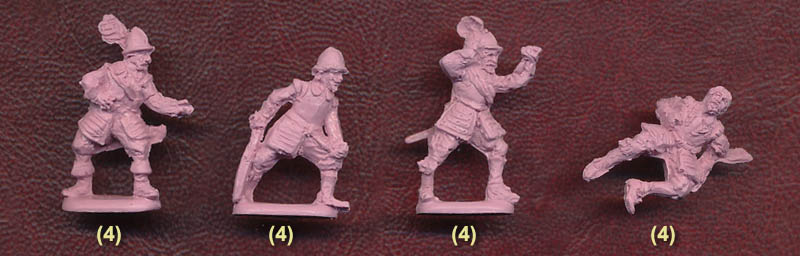
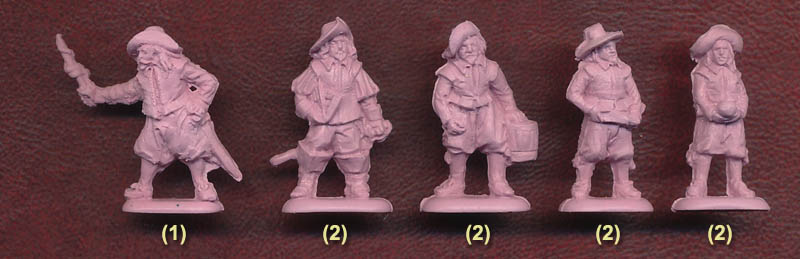
Some mini ideas would be:
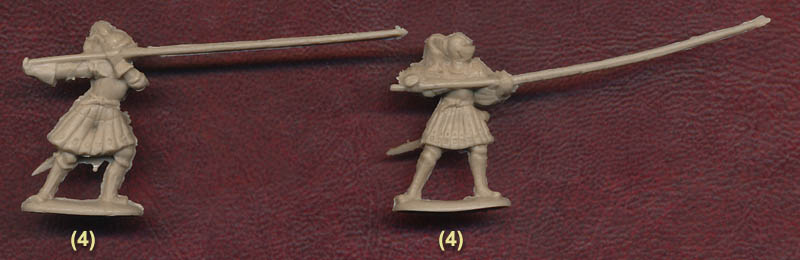
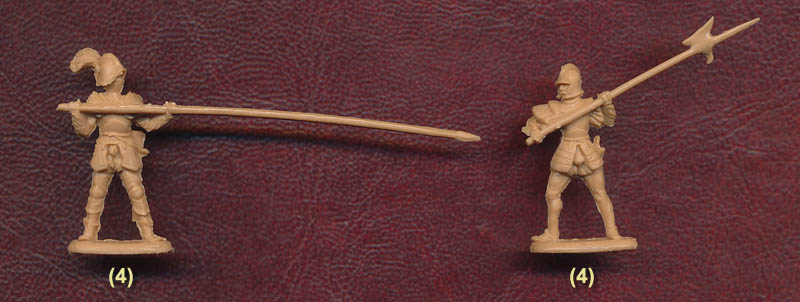
Red Box Landsknechts with heavy pike.
And their Spanish pike and bills
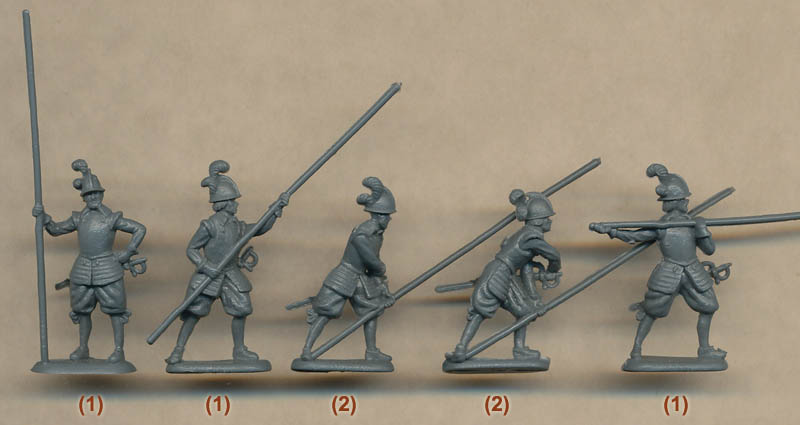
Revells amazing 30 years war troops
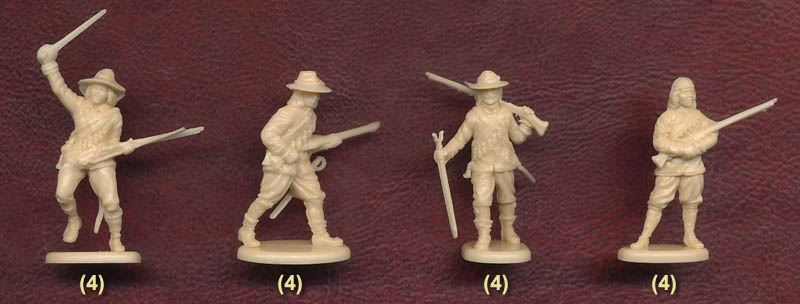
A call to arms great ECW range
Anything but Mars 30 years war range really:
God, please....
.....make....it.....
....stop!!!
(all pictures taken from Plastic soldier review, which is great!)
The upper class still put their faith in polished plate and a powerful warhorse betwixt their legs!. The nobles still clad themselves in a full suit of armour and ride as heavy cavalry. They tend to band together on the battle field to 'give the unwashed what for!'. Most armies of a reasonable size will feature a unit of either mounted or dismounted knights.
'WHAT HO JOHNNY COMMONER, FANCY A TASTE O' ME LANCE...NO WAIT LET ME REPHRASE THAT!'
The cannon will also be in mass effect across battlefields as an extremely desirable war time accessory, all armies will have some amount of them on display.
'Ere, you eyin' up me gun???!!!'
Skirmishers will be in use, either trained regulars or lowly irregulars or even one of the few elite ranger divisions (such as the Crivenshire Royal Storm Badger corpes or the Fossestershire Roughland penetration Company). These troops will normally be missile troops armed with muskets, crossbows or even hunting bows.
Where the differences will come in is in the specialists and odd troops native to the shires for which they fight, from mercenary companies to stream tanks, political activist collectives to unsanctioned wizards to grumpy old codger cults they will hopefully bring some colour and character to the field.
Which is cool because i have most of what i need to do this and i have started basing the minis already!. But i still have to get some bits and bobs....which brings me on to my ebay sales page i'm using to fund the project. Now most of the lots will end Sunday afternoon, at which point i will be posting the next round of lots, here's a sneaky peek for you lovely people:
Lodsa Normans!
Lodsa Macedonians
Loadsa Sea People
Even Ratskin Scouts!.
Have a browse tomorrow if you fancy a bargin!
All thats left is to welcome AKI to the wonky wold of Wronghammerness. AKI produces the rather brilliant Too much Lead which is well worth a peruse at your leisure. Welcome sir!.
....Anyway, 'till next time....
Friday, 19 October 2018
Back to base
A couple of posts ago i mentioned that the mass battle rules i have been using for my campaign are not particularly compatible with my current working hours and time to game was suffering because of it. I have decided to alter the rules to a multi based system to make gameplay (as well as set up) far quicker, aiming to get a game set up, played and put away in about 90 mins.
Just not doable anymore (*sniff*).
The rule changes are coming along well but the re-basing has taken some thought. I have decided that a table top unit will be 3-4 bases of troops for a regular sized unit, 5-6 bases would be a large unit. So as the units wont be using too many bases i will be using roughly 6 or 7 infantry and 2 or 3 cavalry on a base, so an average sized unit of infantry will have 20-27(ish) minis in them. This should allow me to maintain the spectacle of a mass battle but speed up play.
This got me to thinking, How to do the bases?. As you may have already grasped i'm not the 'painty' type. There, i said it, i'm not going to be painting the minis and have to this point used coloured bases to tell the sides apart. I wanted to use the bases in the new system in the same way and was going to go ahead as normal when a not altogether stupid thought struck me (i know, it shocked me too!).
Towhit:
Each shire and faction has its flag as shown on previous posts, the forces of the for shires are these ones 'ere:
Crivenshire
Fossestershire
Burkenshire
Offenhammeshire
So i got the ultra high tech super expensive basing equipment out:
Oooooh fancy!!
And came up with these little fellas:
I think they work o.k. Here's them in use:
Crivenshire pikemen
Burkenshire pikes
Offenhammeshire S.S.T.U.B.* Horse
Fossestershire Billmen
Horse vs pike.
I think in practice they will make it easy to tell who is on what side in the heat of an AAR. What do you guys think?.
Oh yeah, you can still grab a plastic based 20mm bargin over on my sales page so please feel free to have a browse.
....Till next time.....
(* State Sponsored Thuggish Uneducated Bounders)
Subscribe to:
Posts (Atom)